- Debris
- Roads
- Maintenance
Temporary Construction Debris, Lasting Problems: Why Clearance Matters
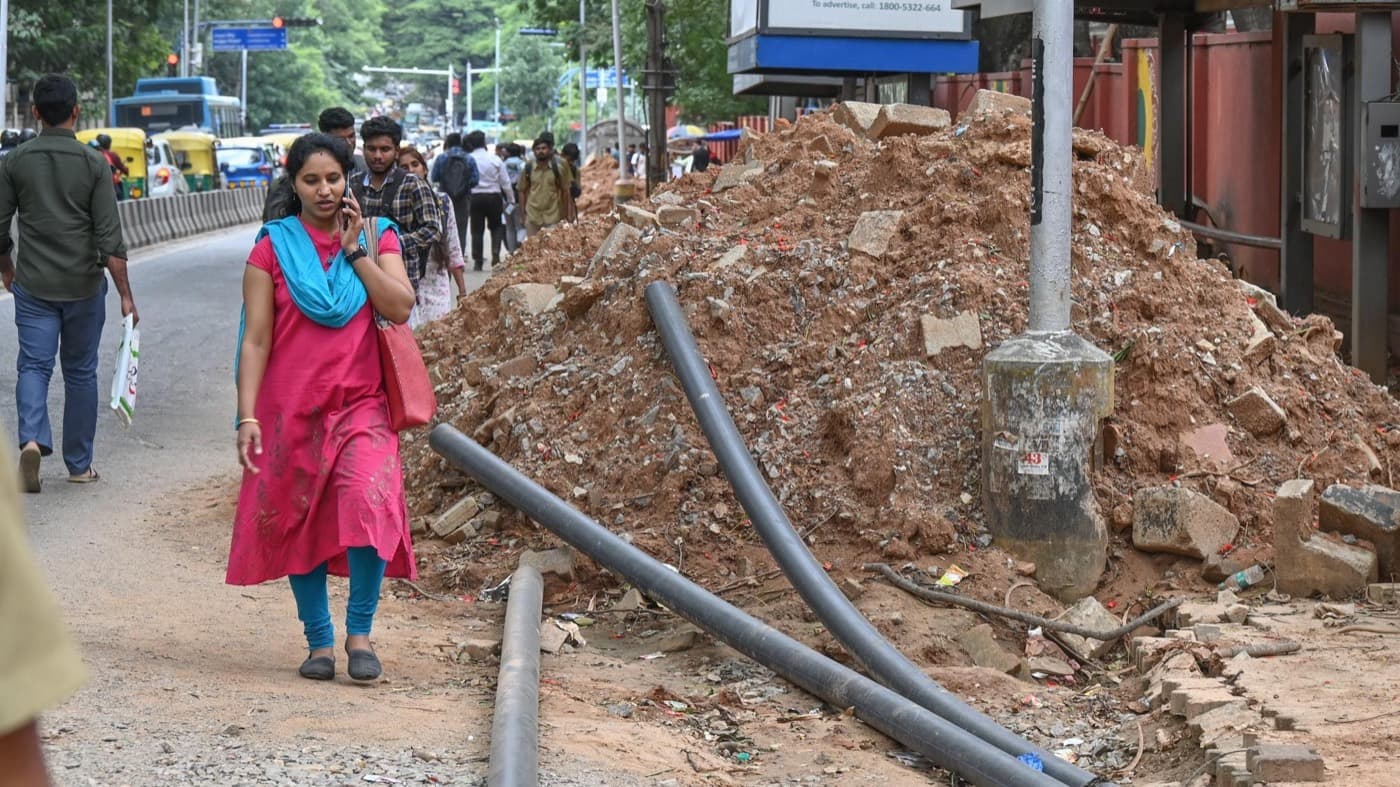
In urban development, the word "temporary" is often used to justify an obstruction. But "temporary" rarely comes with a definitive timeline.
A pile of construction debris may be placed beside a road out of active necessity. But if it remains long after the heavy machinery has departed, it triggers a cascade of operational questions: Who is actually responsible for the final clearance? Was the site ever inspected post-completion?
Delayed cleanups degrade the utility of public spaces, particularly when debris occupies critical pedestrian or vehicular arteries.
The Transition from Storage to Hazard
The reasons for delayed clearance are diverse, ranging from logistical disputes over transportation to fragmented departmental responsibilities. Assuming a single cause for every pile of rubble ignores the complexity of municipal operations.
The more valuable approach is tracking how these issues are documented over time. A static complaint only captures a single moment. A complete civic record includes the initial observation, the timeline of inaction, and verifiable proof of spatial restoration.
Defining "Done" in Urban Maintenance
When can a construction-related public-space issue officially be classified as resolved?
Temporary urban work should never render the long-term deterioration of public space invisible. True closure requires evidence, not just the passage of time.
- Is the debris completely removed?
- Is the underlying walking or driving surface structurally restored?
- Has the final condition been audited by an inspector?
Written as civic argument, not as a report of any specific incident. Photographs are illustrative.
What gets measured gets fixed
Civic Sense AI finds garbage, potholes, construction debris and broken footpaths from a vehicle covering the ward, and attaches a photograph, a coordinate and a time to every one of them.
See how it worksRead next

Subscribe to the Dense Tensor blog
New writing on civic monitoring and product updates, in your inbox.
We use your address only to send the blog. Unsubscribe whenever.
Like this post? Come and build with us.
Dense Tensor builds computer vision that turns what a camera sees into evidence a team can act on.
See open rolesAny feedback or questions?
We would like to hear from you about the writing or about the product.